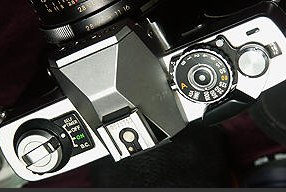
The heat wave continues. It’s hot and humid in Shenzhen, the mainland China province which manufacturers no end of consumer electronics goods. How hot is it? Here's a picture I took just five minutes after my camera emerged from the air-conditioned hotel room:
Friday, July 9, 2010
Saturday, July 3, 2010
Hong Kong and Shenzhen - Part 1
I love China. Some of you might remember the China Blog I kept when I was teaching English there in 2003. Well, now I’m back; this time in Hong Kong on my way to the Shenzhen province, where most of the consumer electronic goods in the world are manufactured.
I’ve always been fascinated with the old part of China. Maybe that’s why I try to balance my shots between the shiny new buildings - copied from the West and symbolize economic success and modernism – and the old, dirty parts that are its heritage. I especially eschew Soviet era relics. I shoot these things knowing that in about 70 years or so they will be mostly gone. Plus, I see it as providing a kind of balance to what you typically see in the press regarding modern China. (Click on any picture to make it bigger.)
Wednesday, June 30, 2010
The Great Firewall of China
The Great Firewall of China is blocking access to Facebook, youtube, my blog, flickr, and a host of other sites. (Don't ask how I posted this). No AT&T reception since I entered the Shezhen province. Blog updates will be a little late, folks! But I can provide this really nice photo in the meantime!
-Gary
===========================================
Florida and Nova Scotia seminars are open for enrollment! http://www.FriedmanArchives.com/seminars
Wednesday, June 16, 2010
Exposing for the Forest
I don't know of any camera anywhere that can expose accurately when shooting in the forest. Usually they come out overexposed and have horrible color - nothing at all like the way you saw it. The good news is you can solve the problem in two easy steps.
Friday, April 2, 2010
A Wonderful Tool for Seeing your Dust
Cleaning dust off my sensor has always been a 20-minute ordeal. You’ve been there: Stop down your lens, take a test shot, move it to your computer to examine for dust, and if you find some, good luck being able to target it accurately. I’d use all sorts of wet wipes, vacuums, blowers, and even my trusty LensPen, but no matter how hard I tried to provide good light I could never actually see the dust particles on the sensor, so I never knew if I got everything off without having to put the lens back on and go through the whole test process again.
That changed forever when I found the new SensorKlear Loupe from Lenspen at the PMA show. Simply put, it’s like a loupe used to view slides, only it has 4 bright LEDs pointing downward to illuminate the dust, and an opening near the bottom so you can reach in and grab the dust with whatever tool you please. Hear me now and listen to me later: this simple device REALLY makes a difference! Unlike every technique I’ve tried in the past, using the SensorKlear Loupe, you can plainly see the dust. (And, unlike similar products like Sensor Loupe by Visible Dust, the SensorKelar Loupe lets you look at the dust while you're cleaning it.) My lens cleaning time is now down to two minutes and there’s no need to ever take a test shot. Highly recommended.
The product is available at most photo retailers and at Amazon.com.
That changed forever when I found the new SensorKlear Loupe from Lenspen at the PMA show. Simply put, it’s like a loupe used to view slides, only it has 4 bright LEDs pointing downward to illuminate the dust, and an opening near the bottom so you can reach in and grab the dust with whatever tool you please. Hear me now and listen to me later: this simple device REALLY makes a difference! Unlike every technique I’ve tried in the past, using the SensorKlear Loupe, you can plainly see the dust. (And, unlike similar products like Sensor Loupe by Visible Dust, the SensorKelar Loupe lets you look at the dust while you're cleaning it.) My lens cleaning time is now down to two minutes and there’s no need to ever take a test shot. Highly recommended.
The product is available at most photo retailers and at Amazon.com.
=======================================
Florida and Nova Scotia seminars are open for enrollment! http://www.FriedmanArchives.com/seminars
Thursday, April 1, 2010
Where have I been?
So it's been awhile since my last newsletter. Yeah, things have been busy. My 12-year-old desktop computer died, so a whole week of productivity was lost configuring a new computer and learning Windows 7, Lightroom and Office 2010 (and trust me, the learning curve is far from over!). Attended the Photographic Marketing Association trade show here in California and have been writing articles for David Kilpatrick (one for Photoworld, one for Master Photography magazine) and of course taking lots of pictures. But perhaps the most memorable happening of the last two months was (were) the successful back-to-back seminars in Copenhagen and Utrecht (which is about an hour away from Amsterdam).
Wednesday, February 3, 2010
The Camera of the Future
Recently one of the Spanish newsgroups had interviewed me (and my very talented Spanish translator, Francesc Garcia) about the books, photography, and other general stuff. (If you're interested you can read the whole thing here, but it's in Spanish. A Google translated version is here.) One of the questions I was asked was "What would your dream camera be like?"
Tuesday, February 2, 2010
The A500's Metering has Nothing to do with Face Detection
In December's blog entry I raved about how unexpectedly good the A500 / A550's metering system was, and at the time I had attributed it to the integration of Face Detection into the metering algorithms. It made perfect sense, and if I were on the design team, I too would have said, "Hey, look, it's reasonable to assume that the face is what you want to focus on, and it's equally reasonable to place a great emphasis on the light on the face when determining what the exposure should be!". Placing such emphasis on the face meant getting great shots in very difficult light - even shots of people who are backlit! (See the December blog for examples.)
It turns out that I was completely wrong. I did some follow-up tests with a backlit subject and shot with Face Detection ON and OFF, with Live View ON and OFF, with Multi-segment metering and Center-weighted metering, and even with Autofocus set to ON and OFF. They ALL came out exposed identically to the left figure above. So Face Detection really had nothing to do with it. Then I grabbed my A700 and took the same shot of the same subject. It took a darker shot, as I have been trained to expect from all built-in light meters made since the 1960's.
Monday, February 1, 2010
Lumodi - A different Breed of Flash Diffuser
You've heard of umbrellas and softboxes before - those are classical means of diffusing light (especially light from an accessory flash) for very pleasing portraits.
Let me introduce you to a 3rd kind of diffuser: Something called a "Beauty Dish" made by a company called Lumodi.
Tuesday, December 1, 2009
Rebuttal to all those Lukewarm Sony A550 reviews
I wasn't going to write this. After all, I never do camera reviews (I just write books about them :-) ) and I had not budgeted any time to write a newsletter this month. However, I have just returned from a family vacation having taken my new Sony Alpha 550 as my only DSLR. Unlike some of the reviews I've read online about this camera, I actually spent time using this camera as it was designed to be used: to take great family pictures. Especially of toddlers (who don't sit still for anything). Especially on a vacation. Especially in low light. And I have to tell you - for this purpose, this camera is just AWESOME!! It can focus faster on moving children than I could using my older cameras and some skill. It is lightweight and ideal for travel. It can shoot in low light and show you images that look brighter than what your eye sees, all with relatively low noise. My A700 (formerly my camera of choice for family events) would never had done this well in some of the challenging situations I found myself in.
Like those other reviews, when I first started to explore the camera, I first latched onto of all the features that were missing that I was used to coming from higher-end cameras: Release Priority mode, AEL-SPOT-TOGGLE mode for the AEL button, conveniently-placed buttons, mirror lock-up, etc. But once I took off my "professional photographer" hat and put on my "tourist" hat these attributes (or lack thereof) quickly melted away (kind of like the molten lava shot on the right, also taken with the A550).
Tuesday, November 3, 2009
User Interface Design
Having recently finished the book on the A330 / A380 and spending considerable time with the A550 right now, I've been living with some of the user interface design choices that the engineers have made. I'm talking specifically about button placement. Sony's entry-level models have been derided due to very poor placement of buttons. If you're used to the excellent ergonomics of the Minolta 7D, or the Sony A700 and higher, where buttons were placed where your fingers naturally fall to enable you to work very quickly, you will almost certainly pick up the entry-level cameras and notice that the controls are not conveniently placed at all. (This happens when high-end Canon users pick up their low-end cameras as well.) What were they thinking?
Subscribe to:
Posts (Atom)
-
So here I was, on my way back from Las Vegas, and I came across a run-down old building that has a certain "character". I pu...
-
Also in this issue: The Next Seminars Other Tidbits My New Favorite Travel Camera When it comes to travel photography, there was al...
-
Also in this issue: How I shot the video Copenhagen, Colorado, and California Seminars are happening! A65 / A77 book is out, and timel...