Tuesday, July 30, 2019
Ways to Stabilize a Video (aka, "Gary Friedman has Too Many Cameras")
Image stabilization for video is different than image stabilization for stills. That’s because the nature of the shake to be corrected is different. For video, the correction has to last longer and the shakiness may very well be more intense (like when you’re walking and shooting video at the same time, for example.)
That’s why most modern digital cameras have a different, more aggressive system for correcting video shake. In addition to whatever optical stabilization the camera offers, the more aggressive way takes advantage of the fact that the number of pixels in a video (even a 4K video) is far smaller than the number of pixels the sensor has. So the camera might shoot a little wider than what you see in the viewfinder, and the camera compares adjacent video frames, aligns them (much like it does in HDR mode), and crops off the rest before merging it into the video stream. All in real time. The more you oversample (capture pixels outside of the intended frame), the more leeway you have for fixing a shaky hand.
I was reminded of this when I shot a very informal video giving a tour of my studio. Here it is, shot using an RX100 V and a small tripod-socket-based handle (mechanically similar to the VCT-SGR1 recently announced by Sony with their RX100 III vlogging bundle,) For this, the more intense "Intelligent Active" SteadyShot feature for movies was enabled:
As you can see, the shakiness of my hand often exceeded what the camera’s made-for-movies steadyshot could do. It bugged me a lot, but when I posted it to my youtube channel, only one person complained. (On the other hand, this is Youtube, where even the worst production values raises the average.)
Is there anything I can do in post-processing to smooth this out?
Monday, July 1, 2019
A Premature End...
"Your Mother has stopped accepting food and water. Hospice has been called. You'd better get back here."
That shocking news came when we were 4 weeks into a 5-week trip. And it had been quite a whirlwind before I left early to fly home. Let me tell you what it was like. This will necessarily be a short blog post.
The trip began with a stop in Pennsylvania for my niece's college graduation. (Click on any image to view larger) (and sharper).
Monday, May 20, 2019
Greatest Subject Tracking (except...)
I wrote up my findings and submitted a whole string of sample sequences for the latest issue of Cameracraft magazine. One of the sequences had the camera successfully track a pole vaulter even though the athlete was partially obscured for a few shots (some samples from that sequence appear above). This prompted David Kilpatrick, the magazine's editor, to proclaim, "[T]he sequence is very impressive as I’m not sure any camera I use now (A6500, A7RIII, Olympus) would hold focus on the subject in these circumstances."
But, I found a problem. Which I'll relate to you in a bit.
Wednesday, April 3, 2019
Lighting for Street Portraits
Also in this issue:
- Vegas Seminar
- A9 v5 update
- A6400 ebook
- Other updates...
This is the famous Acorn Street in Boston, where I recently took some family portraits. It's a very popular street for this purpose; I had to fight other people and other photographers just to get a few minutes of ideal shooting time.
This lighting technique is pretty routine for me now but it did raise the curiosity level of at least one area photographer. "How was the lighting done?" I'll explain it, but not before I point out that you can tell where the light was by examining the direction of the shadows.
Tuesday, March 12, 2019
NASA Computing from the 1980's
Also in This Issue:
- Cameracraft Lens Surprises
- Geeking with Gary
- Vegas Seminar!
- And more...
JPL Computing Section Added to the Friedman Archives Website
Wednesday, February 6, 2019
Photographing Classic Cars
- An Invitation to Las Vegas!
- Banding Effects with Electronic Shutters (video)
Thursday, January 3, 2019
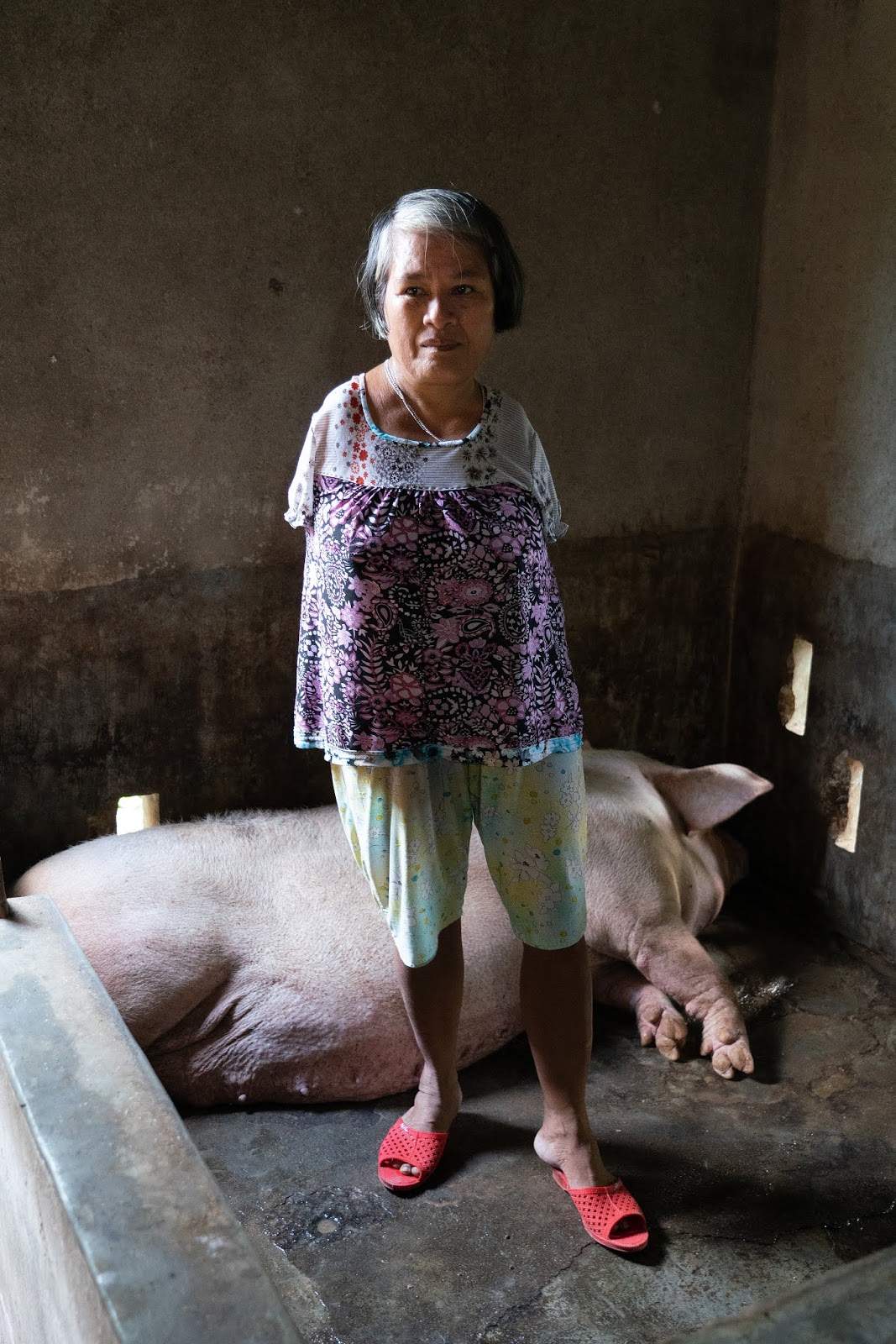
The Faces of Vietnam (Part 1)
I've just returned from Vietnam, on assignment with the organization Photographers Without Borders. On this trip I was to document the work of "Hearts for Hue", a humanitarian NGO looking to help rebuilt one of the hardest-hit cities of the Vietnam war - a war that, apparently, is still going on between the North and the South. My assignment was to tell the story of the positive difference the organization was making, via both stills and video. There are a lot of stories to tell, and of course many of you are interested in the technical side (including why I rarely kept the camera on straight "Auto"). So I'm splitting this story into two blog posts - in this one I'll share with you my pictures and stories. In the next post I'll talk about what the experience was like, the equipment I used, and what it's like working for Photographers Without Borders. You can do this kind of work for them too!The Faces of Vietnam (part 2)
Tuesday, January 1, 2019
Encryption that Makes Everyone Happy
[Editor's note: This is a compilation of several posts I made over the years which discusses a solution to the seemingly intractable disagreement between law enforcement and privacy advocates over the encryption of personal data. This has little to do with photography.]
I think I found a solution to the Apple vs. FBI stalemate that requires no back door, maintains strong privacy, and still provides for legimate law enforcement access when there is a warrant. What do you think of this idea?1st Post - February 18, 2016
As often happens with politicized topics, there is much ignorance and lies being spewed by all parties when it comes to the encryption vs. privacy vs. government access vs. security debate. I'm not advocating mass eavesdropping; rather I'm talking about legitimate law enforcement needs to solve murders and kidnappings in cases where a warrant has been issued. (Traditionally, warrants have been the mechanism to keep power-hungry government officials in check.)
If you've been following this subject at all in the media, you'll be hearing two major arguments:
1) "Strong encryption prevents the government from preventing terrorism, therefore manufacturers must install 'back doors' to the encryption that the government can use to eavesdrop". (This has been proven to be propaganda, as there are no demonstrated cases where not having access to an encrypted channel would have prevented anything.)
2) "We want to help law enforcement, however if such back doors were to be installed, hackers would be able to access it too, allowing no shortage of evil to take place. Plus, the NSA and other officials have demonstrated that they're not as concerned about due process when it comes to overstepping eavesdropping authority. It would be a public policy disaster and U.S. tech companies would lose international business as confidence in their security drops."
The above set of arguments is what's called a false dichotomy; it implies that these are the only two options available. Throughout this argument, nobody - not even encryption experts - has talked about existing encryption algorithms which can meet everyone's legitimate needs without necessitating a back door. It's called (m,n)-threshold encryption, and it works like this: Instead of having one key (that can both encrypt and decrypt), or two keys (one to encrypt and another to decrypt), you can encrypt anything using m of n keys, meaning you can have multiple keys floating around, and any 2 or 3 (or whatever combination you choose) of those keys can decrypt the contents. You can also configure it to have just one of the keys lock but two of any of the other keys will be required to unlock. It can be custom-tailored to meet specific use cases.
How would this work in the case of a smartphone?
Sunday, November 25, 2018
Why I still like the A-Mount
- Food Photography Frustration
- Friedman Archives Seminars - Home Study Course is on sale!
But part of it also are these useful features that the E-mount bodies don't feature:
Friday, November 2, 2018
Fun with Green Screens, Part 2
Green screens are not as intimidating as you might think. Here's the link to my original Green Screen article which I wrote for Cameracraft magazine, which also includes a link for the free Photoshop plug-in you can use to knock out the green easily and accurately, with no "green halo" like you would normally get by just doing a color selection and erasing it.
-
So here I was, on my way back from Las Vegas, and I came across a run-down old building that has a certain "character". I pu...
-
Also in this issue: The Next Seminars Other Tidbits My New Favorite Travel Camera When it comes to travel photography, there was al...
-
Also in this issue: How I shot the video Copenhagen, Colorado, and California Seminars are happening! A65 / A77 book is out, and timel...